> For the complete documentation index, see [llms.txt](https://docs.aqua-cloud.io/documentation/llms.txt). Markdown versions of documentation pages are available by appending `.md` to page URLs; this page is available as [Markdown](https://docs.aqua-cloud.io/documentation/integrations/aqua4jira-plugin-cover-jira-issue-with-aqua-test-cases/installing-plugin-for-jira-cloud.md).
# Installing plugin for Jira Cloud
Install the aqua4Jira plugin in Jira via the Apps section or Atlassian store. Follow step-by-step instructions to upload, activate, and seamlessly integrate aqua with your Jira setup.
You can install the **aqua4Jira** plugin in two ways:
**Option 1: From the Atlassian Marketplace**
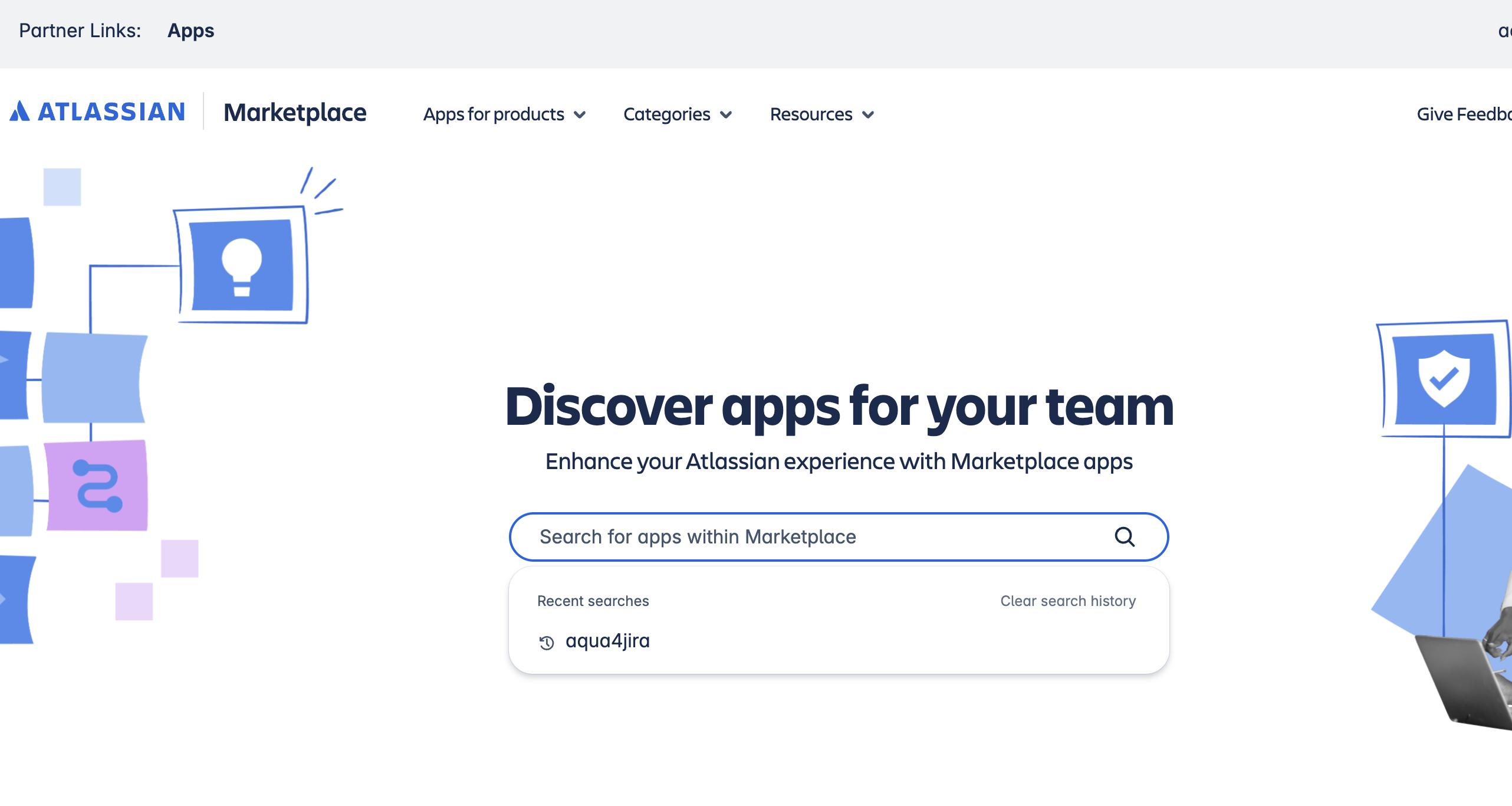
* Go to [Atlassian Marketplace](https://marketplace.atlassian.com/)
* Search for **aqua4jira**
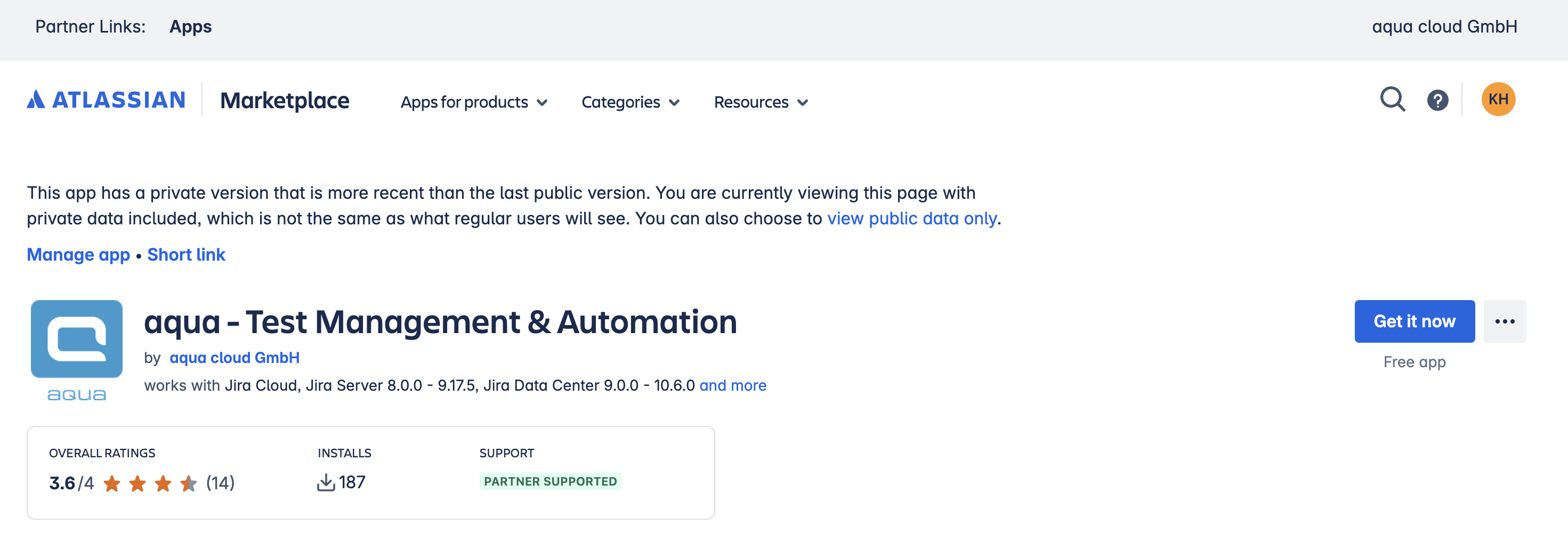
* Click **Get it now** and select the instance for which you want to install plugin if you have many of them.
* Follow the instructions to complete the installation. It only takes a few minutes!
**Option 2: From your Jira instance**
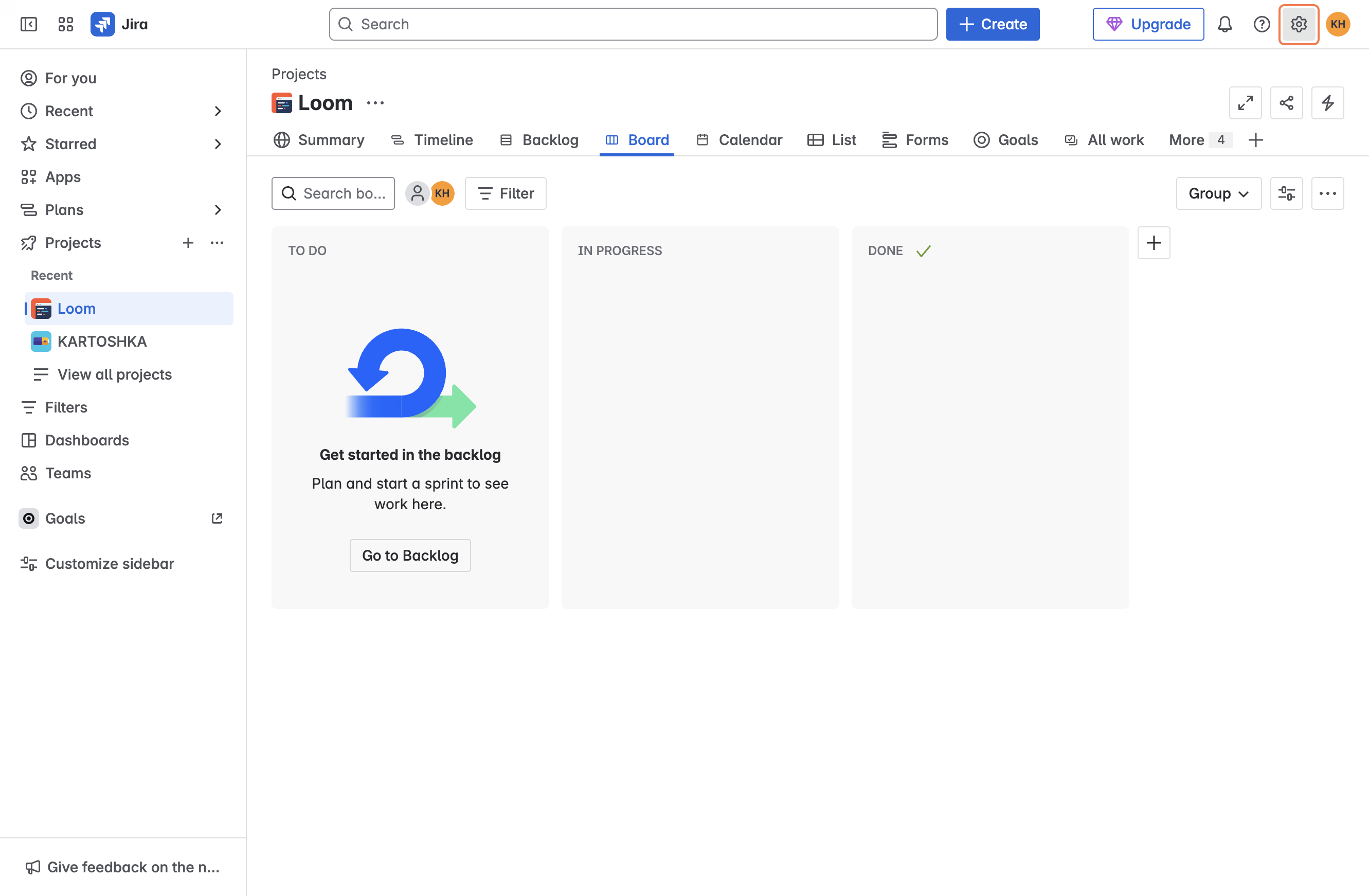
* Open your Jira Cloud instance
* Open **Settings** in the top menu
* Click **Apps**
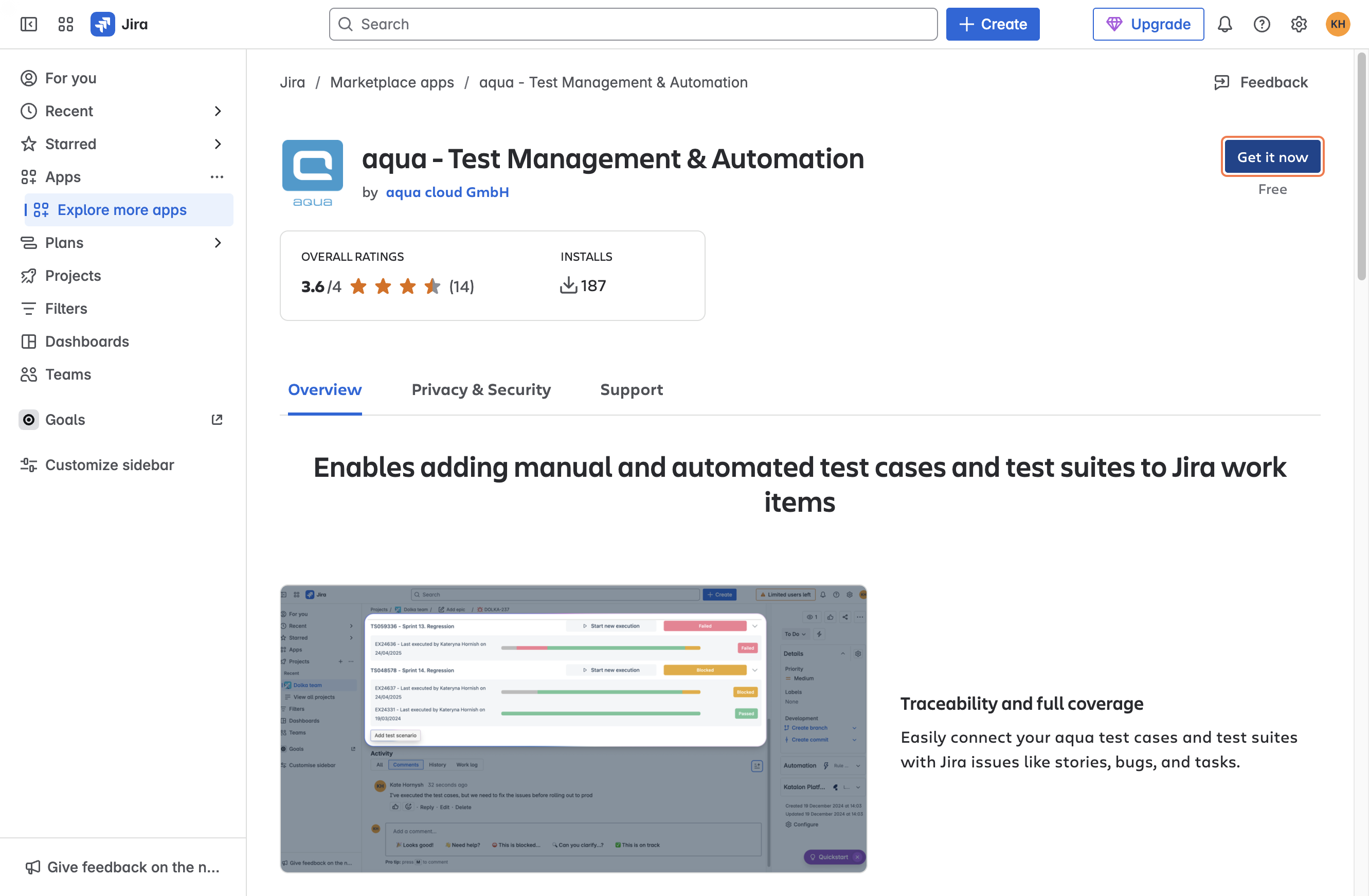
* Once you land on the Apps page, click **Explore apps**
* Then search for **aqua4jira**
* When you are on aqua4jira page, click on the 'Get it now' button.
Then select the site for which you want to install it and click the **Review** button.
In a few seconds it will be installed and you need to click **Manage** app on the toast message that appears once plugin is ready.
You will be navigated to the Apps page where you need to select **aqua Configuration** on the sidebar.
### **aqua pre-requisites**
To connect the plugin, you need to create a **technical user** in aqua and assign them the **Jira plugin license**.
This license is included with every paid aqua subscription by default, at no extra cost.
Creating a technical user works the same way as adding any other user in aqua.\
For step-by-step instructions, check out our guide: [*How to add a new user*.](/documentation/user-administration/adding-and-editing-user-profile.md#adding-user)
Once a user is created, you need to assign all projects from which you'd like to link test cases and test scenarios (suites). Since technical user doesn't modify any items, a role with read-only permissions will suffice.
### **Configuring plugin in Jira**
At the configuration page, you need to provide:
* the base URL of your aqua site
* username of your technical user (The plugin requires a user who is not already present in aqua, unless it’s the Jira sync user)
* password of your technical user
You can click to test connection to verify if everything has been filled out correctly.
Next, choose whether you want to enable test cases, test scenarios, or both.
You can also restrict access to specific Jira projects if needed.
Once you've set your preferences, click **Save** to apply the configuration.
The plugin is ready to be used.
---
# Agent Instructions
This documentation is published with GitBook. GitBook is the documentation platform designed so that both humans and AI agents can read, navigate, and reason over technical content effectively. Learn more at gitbook.com.
## Querying This Documentation
If you need additional information that is not directly available in this page, you can query the documentation dynamically by asking a question.
Perform an HTTP GET request on the current page URL with the `ask` query parameter, and the optional `goal` query parameter:
```
GET https://docs.aqua-cloud.io/documentation/integrations/aqua4jira-plugin-cover-jira-issue-with-aqua-test-cases/installing-plugin-for-jira-cloud.md?ask=&goal=
```
`ask` is the immediate question: it should be specific, self-contained, and written in natural language.
`goal` is optional and describes the broader end goal you are ultimately trying to accomplish on behalf of the user. GitBook uses it to tailor the answer towards what is most useful for that goal.
The response will contain a direct answer to the question and relevant excerpts and sources from the documentation.
Use this mechanism when the answer is not explicitly present in the current page, you need clarification or additional context, or you want to retrieve related documentation sections.