> For the complete documentation index, see [llms.txt](https://docs.aqua-cloud.io/documentation/llms.txt). Markdown versions of documentation pages are available by appending `.md` to page URLs; this page is available as [Markdown](https://docs.aqua-cloud.io/documentation/automation/desktop-client/soapui.md).
# SoapUI
Learn how to use the Desktop Client in SOAPUI automation. Step-by-step guidance for setup, execution, and managing automated API tests on your desktop.
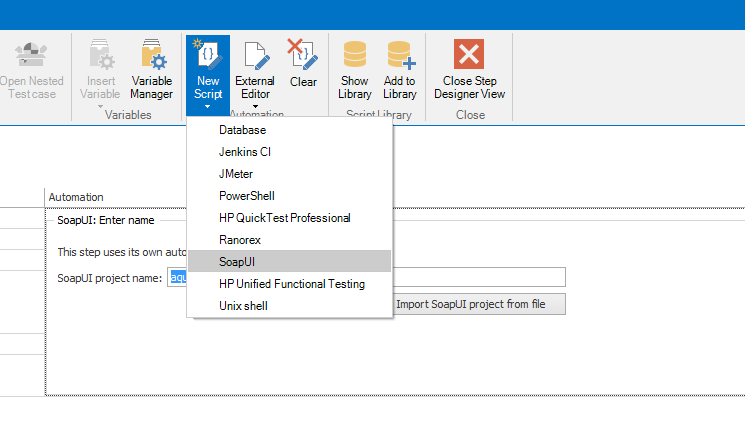
First, you go into a test case and click onto *Automation*. Here, you can add a *SoapUI Script*:
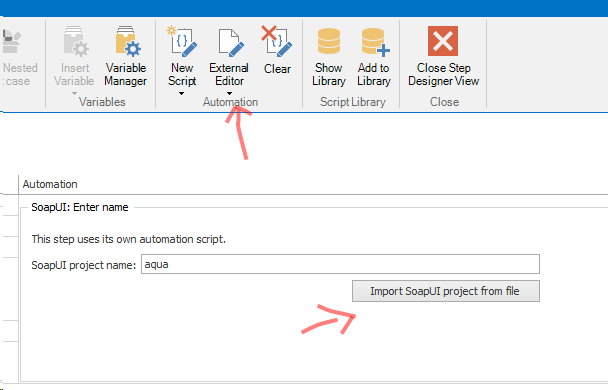
A new template is created which can be opened using the *External Editor* or replaced by a SoapUI project file.
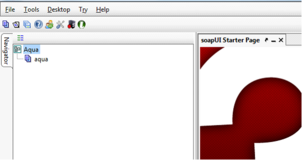
By clicking on *External Editor* a blank project will be opened in *SoupUI*. Test cases can be recorded and edited here.
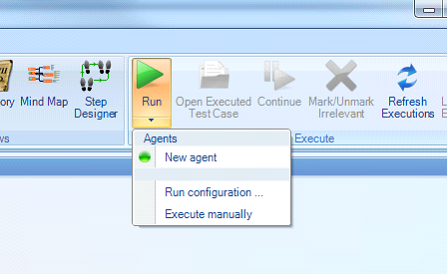
To run an automated test, the test case must be executed in the same way as the manual tests. Open the test case and click on the *Run* button.
Following the run of an automated test, you can see if the test was successfully completed. In addition, you receive more information from *SoapUI* in the execution log by clicking on the appropriate buttons.
### **Parametrization**
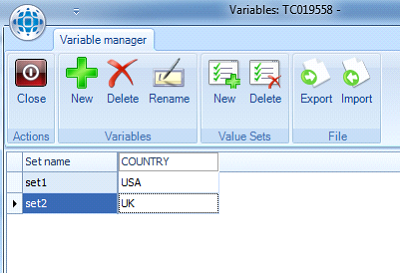
aqua offers you the option to define parameters and to transmit them to *SoapUI*. To do this, define a set of values in the *Variable Manager* of the test case.
When executing this test case, a set of values valid for this version can be selected. The execution log with the selected record can be seen later.
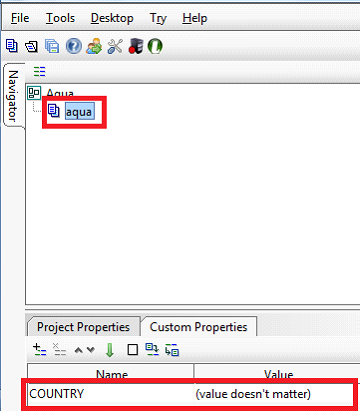
To ensure that the values are used in *SoapUI*, properties must be created at top level *SoapUI* project. These properties must have the same identifier as the variables of the aqua-value-set.
If you run the test case, these properties will be overwritten by the aqua-agent and the values will be recorded in the log.
## **Configure Agent**
To configure and start the SoapUI Agent, extract the AquaSoapUIAgent-\*.zip.
Here, open agent.properties and insert the agentCode and aquaServiceURL:
```csharp
agentCode=pvq6wrb70huknv47ji39
aquaServiceUrl=http://youraquaserver/aquaAPI/aquaagentwebservice.asmx
updateInterval=15000
#The logging level for the execution log sent to the server
# ERRORS_ONLY : Only abnormal results are logged
# RESULTS_ONLY : Only results are logged
# DETAILED : Information on assertions, property transfers and exceptions is logged
# MESSAGE_DUMPS : Request and Response contents are logged
agentLogLevel=ERRORS_ONLY
#The path to the temp directory. The directory must exist when starting the agent.
#Please use \\ to seperate directories.
#Absolute and relative paths are allowed:
# - D:\\temp
# - temp
tempDirectory=temp
#Files in temp folder are deleted after the execution finished (true or false)
deleteTempFiles=true
proxyHost=
proxyPort=
proxyUsername=
proxyPassword=
```
Then, open the file agent.bat using the editor and edit the line
{% code overflow="wrap" %}
```csharp
if .%SOAPUIPATH% == . set SOAPUIPATH=c:\Program Files\SmartBear\soapUI-4.5.1
```
{% endcode %}
with your current version. Your agent can now be started with starting agent.bat
---
# Agent Instructions
This documentation is published with GitBook. GitBook is the documentation platform designed so that both humans and AI agents can read, navigate, and reason over technical content effectively. Learn more at gitbook.com.
## Querying This Documentation
If you need additional information that is not directly available in this page, you can query the documentation by asking a question.
Perform an HTTP GET request on the following URL with the `ask` and `goal` query parameters:
```
GET https://docs.aqua-cloud.io/documentation/automation/desktop-client/soapui.md?ask=&goal=
```
`ask` is the immediate question: it should be specific, self-contained, and written in natural language.
`goal` is what the user is ultimately trying to achieve, the reason they need the answer. Sharing it helps GitBook give you a better, more relevant answer. A goal is most helpful when it describes the outcome the user wants rather than restating the question. For example, with `ask=how do I create an API token`, a goal like `automate deployments from our CI pipeline` lets GitBook tailor the answer to that use case.
The response will contain a direct answer to the question and relevant excerpts and sources from the documentation.
Use this mechanism when the answer is not explicitly present in the current page, you need clarification or additional context, or you want to retrieve related documentation sections.